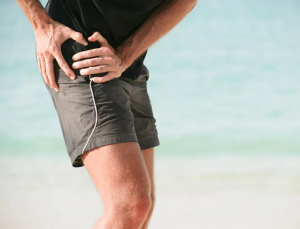
At Chadstone Region Osteo, we commonly see patients complaining of pain around their hip region.
Our hip joints are the biggest joint in our body, and carry a significant portion of our body weight. They are required for most of the movement that humans need to do (walking, bending, lifting, toileting etc).
The joint itself (the bone and cartilage) is commonly a source of pain, however there are other tissues in the area which can also become irritated or injured, such as ligaments, tendons, labrum and bursae.
Common conditions which may lead to pain in the hip area are:
– Joint specific problems, such as arthritis/degeneration and associated inflammation or labral tears. This will usually cause sharp, catching pain deep in the hip joint, or stiffness and pain upon waking up in the morning which may cause difficulty walking.
– Tendinitis/Tendinopathy of the gluteal tendons – this condition will usually cause an achey pain on the outside of your hip (the “side of your bum” muscles) and may be worsened with walking or laying on the affected side. Patients often report that they are unable to find a comfortable sleeping position due to pain.
– Bursitis of the hip – Bursitis is a condition where a bursa (a small fluid filled sac which cushions our tissues) becomes inflamed and swollen. Common hip bursitis diagnoses are: Trochanteric (side of hip, the most common), Ischial (Back of hip/bum) or Illiopsoas (front of hip/hip flexor).
Each of these conditions is treated differently, and each patient experiencing hip pain will have a different version of their diagnosis, specific to them and their circumstances. For instance, tendinitis requires specific progressive strengthening exercises, whereas arthritis may require initial rest and be followed by a paced activity program to improve natural lubrication of the joint. Bursitis is another kettle of fish all together, and may respond well to a multi practitioner approach with input from your GP regarding injection or medication, alongside an appropriate exercise program from your Osteopath.
Our Osteopaths are trained to assess your hip pain and locate the likely cause of it, and to discuss ways to improve the function of the affected tissue.
It is important to remember that the majority of hip pain will be worsened from inactivity – movement helps to lubricate joints, to keep our tendons juicy and healthy and our bones strong. Prolonged rest or sedentary behaviours are unlikely to assist in improving your hip condition, even if avoiding the pain by resting feels good at the time.
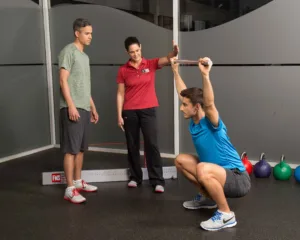
Our Osteopaths are able to advise you on how best to exercise your hips and remain active, which is helpful and important for longer term recovery and prevention of your hip pain becoming persistent.