Osteopathy, Chronic Pain, and the Surprising Alignment with Modern Science
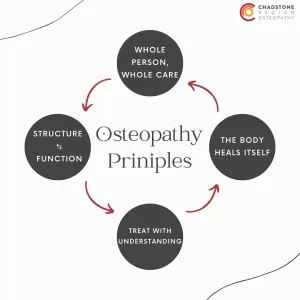
Traditional osteopathy has always been guided by four foundational principles that emphasize the body’s capacity for self-healing, the interconnectedness of its systems, and the importance of treating the whole person. These principles were developed over 150 years ago — long before neuroscience, pain imaging, or the biopsychosocial model of care.
Yet, remarkably, modern pain science has not replaced these principles — it has validated them.
Contemporary research shows that chronic pain is a complex, whole-person experience influenced not just by tissue damage, but by the nervous system, stress, emotion, and learned protective patterns. And in many ways, these insights align beautifully with osteopathy’s original philosophy.
In this blog, we’ll explore how our modern understanding of pain fits hand-in-hand with osteopathic thinking, and why up-to-date osteopaths are uniquely equipped to support people living with chronic pain.
1. The Body is a Unit: The Person is a Unit of Body, Mind, and Spirit
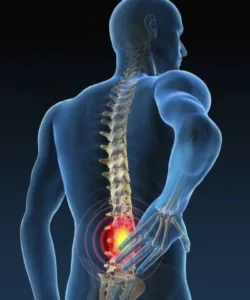
Chronic pain is rarely just about the body. Stress, trauma, beliefs, fear, relationships, sleep, and even purpose can all amplify or maintain the pain experience. The biopsychosocial model of pain—now widely accepted in modern medicine—recognizes this complexity.
This model aligns directly with osteopathy’s first principle: that a person is an integrated whole. Pain in the back may be tied to emotional tension. Neck pain may relate to stress or past trauma. A headache might involve diet, screen time, posture, and sleep. Osteopaths are trained to see this bigger picture.
Chronic pain is not a broken part to be fixed — it’s a whole system to be supported.
Osteopathic care listens to the body, but also to the person behind it. That means taking time to understand someone’s story, not just their symptoms.
2. The Body is Capable of Self-Regulation, Self-Healing, and Health Maintenance
This principle often seems at odds with chronic pain. If the body is capable of healing, why hasn’t it?
But the truth is, chronic pain doesn’t mean the body has failed — it means the body has adapted in a way that has become unhelpful. The nervous system has become overprotective, keeping pain signals active long after tissue healing is complete.
From an osteopathic view, this is still self-regulation — just dysregulated.
The brain interprets normal movement as dangerous.
Muscles stay tense to “protect” against injury.
The sympathetic nervous system remains on high alert.
Osteopathy works to gently interrupt these patterns, not through force, but by creating the right environment for the body to reset.
The goal isn’t to fix the body — it’s to help the body feel safe enough to regulate itself again.
This may involve improving breathing, circulation, sleep, and movement — all of which support self-healing on every level.
3. Structure and Function are Reciprocally Interrelated
This principle is often interpreted biomechanically: tight muscles cause dysfunction, and dysfunction causes tight muscles. But when we bring in neuroplasticity—the brain’s ability to adapt and rewire itself—the principle becomes even more powerful.
Pain changes how we move, and how we move reinforces pain. For example:
A person with chronic back pain might stiffen their posture, avoid bending, and clench their muscles.
Over time, this becomes their “new normal” — a learned pattern, both structurally and neurologically.
The nervous system adapts to this pattern and begins to anticipate pain, even in the absence of threat.
This is a two-way street:
Structure shapes function (how tissues move, how joints are loaded).
Function shapes structure (how the brain maps the body, how we hold ourselves).
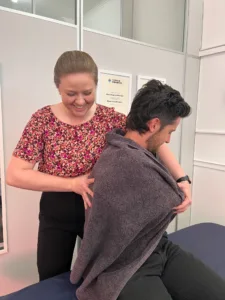
Osteopathic treatment uses hands-on work, movement, and sensory input to update these patterns — giving the body and brain new, safe experiences to learn from. This is how neuroplasticity becomes part of healing.
Pain isn’t always a sign of damage — it can be a sign of stuck patterns. Osteopathy helps those patterns shift.
4. Rational Treatment is Based on the Understanding of These Principles
When all of the above is understood — the unity of the person, the body’s self-healing ability, and the interplay of structure and function — treatment becomes rational, personal, and effective.
Rather than relying on protocols or cookie-cutter solutions, osteopathy meets the person where they are. In chronic pain, this means:
Using touch not just to manipulate tissue, but to reassure the nervous system.
Explaining pain in a way that reduces fear, empowering the patient with understanding.
Encouraging gentle, consistent movement to stimulate healthy neuroplasticity.
Building trust — in the therapeutic relationship, and in the patient’s own body.
Modern pain science tells us that one of the most powerful interventions for chronic pain is simply changing the meaning of pain — from danger to protection, from enemy to signal, from permanent to changeable.
Osteopathy embodies that change.
A New Way to Understand Chronic Pain
When we bring the four osteopathic principles together with modern neuroscience, a new picture of chronic pain emerges:
It’s not just a tissue issue — it’s a whole-person pattern.
It’s not irreversible — it’s adaptable.
It’s not a sign of failure — it’s a sign that your body is trying to protect you.
And most importantly:
You are not broken. You are adaptable. And with the right care, your body can learn to feel safe again.
Osteopathy offers a space for that process — using knowledge, touch, and connection to help the body remember what it already knows: how to heal.
If you’re living with chronic pain, know this: it’s real, it’s valid, and it’s changeable. Whether the pain has lasted for months or years, your body still has the capacity to adapt — and osteopathy can support you in that journey.
Pain may be persistent, but so is healing.
We’re happy to answer any questions you might have, please email us if you need any advice! info@chadstoneregionosteo.com.au