
Managing Holiday Pain: Gentle, Science-Backed Strategies

How to Manage Pain and Stress During the Festive Season?

The festive season can be joyful — but it can also be busy, noisy, and physically demanding. Between social events, late nights, extra travel, and long stretches of sitting or standing, it’s easy for your body and mind to feel a little overwhelmed. The good news? Small, realistic habits can make a big difference.

In this guide, you’ll find a handful of simple, evidence-supported strategies to help you move with more ease, stay calm amidst the chaos, and support your wellbeing through the holidays. No perfection, no rigid rules — just gentle, practical tools to help you feel a little better in your body and a lot more settled in your mind.

Let’s make this season a kinder one for you.

Move Often

Small, frequent movement breaks help reduce stiffness, improve mood, and support your nervous system.

  • Micro-movement counts:
    2–3 minutes of movement every 30–60 minutes (walking to the kitchen, stretching your back, light chores) can reduce pain sensitivity and improve circulation.

  • Walk whenever you can:
    Walking supports joint lubrication, reduces systemic inflammation, boosts endorphins, and helps settle a sensitised nervous system.

  • Pair movement with habits you already do:

    • Stand or walk while on the phone

    • Do a few calf raises while the kettle boils

    • Gentle spinal rotations or shoulder rolls between tasks

  • Don’t wait for the “perfect workout”:
    Short bouts of movement (5–10 minutes) have been shown to improve stress, mood and energy just as effectively as longer sessions when done regularly.

Keep Hydration Simple

Water supports joint health, cognitive function, mood, and energy — especially during hot weather and busy days.

  • Use visual reminders:
    Keep a full bottle on your desk, in the car, or next to your bag.

  • Habit stack:
    Drink a glass of water every time you arrive home, finish a meeting, or make a meal.

  • Aim for steady sipping:
    Consistent hydration throughout the day maintains concentration, reduces fatigue, and supports tissue health.

  • Flavour helps:
    Add mint, lemon, berries, or ice to make it more appealing if you struggle with plain water.

  • Swap, don’t stop:
    If alcohol or festive drinks are part of your celebrations, alternate with water to protect sleep and reduce headaches or muscle tightness.

Reduce Overwhelm & Settle the Nervous System

The end-of-year juggle is real. These strategies have strong evidence for calming overwhelm and supporting wellbeing.

    • Create small “reset moments”:

      • 3 slow breaths

      • Step outside for light and air

      • 1–2 minutes of gentle stretching
        These micro-pauses help reduce sympathetic drive and support clearer thinking.

    • Try a guided box-breathing reset:
      A simple, evidence-supported breathing pattern that reduces stress and calms the nervous system.

 
    • Flavour & savour your day with values:
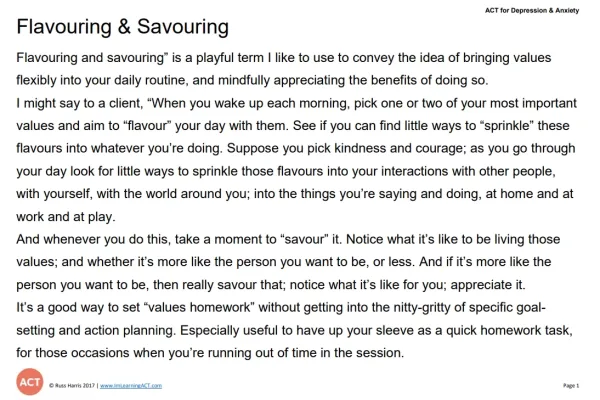
      Bring a mindful lens to your moments. Russ Harris describes a practice called “flavouring & savouring” — sprinkle your values into everyday actions, then savour the experience.

flavour
  • Choose the “one thing that matters most”:
    Daily prioritising reduces cognitive load and decision fatigue.

  • Use a 5-minute rule:
    Start any overwhelming task with just 5 minutes. Once started, the brain’s stress response decreases.

  • Limit multitasking:
    Switching between tasks increases stress chemicals and reduces efficiency.

  • Protect your sleep routine where you can:
    Regular wake times, morning light exposure, and winding down at night all support pain modulation and emotional regulation.

  • Say “yes” and “no” with intention:
    Social connection is protective; over-commitment is draining. Choose what nourishes you

Support your Body During Busy Days

  • Check in with yourself:
    How am I feeling? Do I need a break, movement, food, water, or rest?

  • Break up long sitting or standing times:
    Alternating postures reduces strain and helps maintain comfort.

  • Use heat or gentle self-massage:
    Helpful for muscle tension, especially during stress.

  • Keep expectations kind:
    Your body does better when the narrative is “I’m doing my best” rather than “I’m behind.”

Managing Holiday Pain: Gentle, Science-Backed Strategies

If You’re Feeling Particularly Run Down

  • Reach out early:
    Small issues are easier to settle than big ones.

  • Use supportive routines that help your nervous system feel safe:

    • Consistent meals

    • Relaxed social contact

    • Light exercise

    • Good sleep hygiene

  • Lean on your healthcare team:
    We’re always here to help you reset, regroup and feel more like yourself. If you would like our help, please book below.

We’re happy to answer any questions you might have, please email us if you need any advice! info@chadstoneregionosteo.com.au

Share:

More Posts:

Shoulder Pain - Osteopathic Assessment & Treatment

Moving away from bursitis, impingement and rotator cuff tears

The way we understand and talk about shoulder pain is changing. Traditional labels like “rotator cuff tear,” “subacromial impingement,” and “bursitis” are being questioned in light of new research showing they often don’t reflect the real cause of pain—or lead to better outcomes. In this blog, we explore why these terms are falling out of favour, the risks of over-relying on imaging, and how more functional, person-centred language is shaping modern shoulder pain management. Whether you’re a clinician or someone experiencing shoulder issues, these insights could change the way you view recovery.

Osteopathy near me- Oakleigh & Carnegie clinics at Chadstone Region Osteopathy

Book an Osteopathy Appointment in Oakleigh or Carnegie

Looking to book an osteopath appointment near Chadstone, Oakleigh, or Carnegie? Discover how easy it is to schedule your visit, what to expect during your first session, and how our experienced osteopaths can help with pain relief and improved movement.