Introduction
You’ve finally committed to your fitness routine. Maybe you’ve signed up for that running club, started CrossFit, or decided to get back into playing tennis. Then, just when you’re feeling confident and strong, an injury sidelines you—sometimes from something that seems simple, like a awkward lunge or a twist during play.
But what if there was a way to identify your movement vulnerabilities before injury happens? What if a brief, simple assessment could reveal the movement weaknesses putting you at risk? This is where movement screening comes in—a revolutionary approach that both physiotherapy and osteopathy use to catch problems early and keep you doing the activities you love.
What Is Movement Screening, and Why Does It Matter?
Movement screening is a systematic evaluation of how your body moves through fundamental patterns—think squatting, lunging, stepping, and twisting. It assesses whether you have adequate strength, stability, flexibility, and coordination to perform these basic movements without compensation or dysfunction.
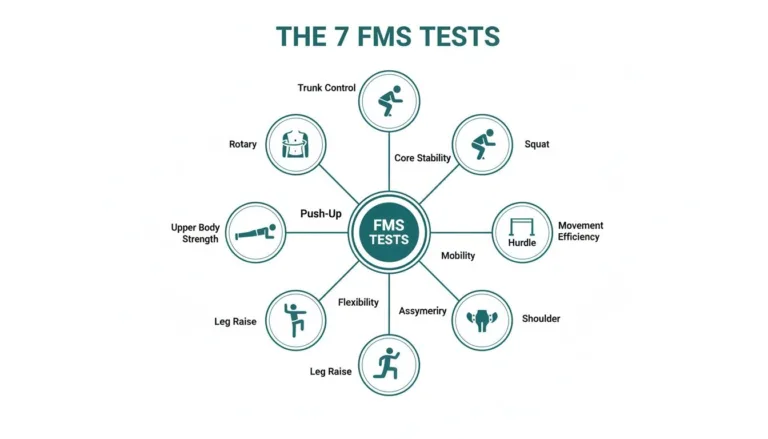
One of the most well-researched screening tools is the Functional Movement Screen (FMS), which evaluates seven fundamental movement patterns. The logic is straightforward: poor movement patterns are an injury waiting to happen. They create imbalances, overload certain joints, and leave you vulnerable when you demand more from your body.
Recent research from 2025 demonstrates the power of this approach. A study published in the Journal of Athletic Training found that high school baseball pitchers who showed poor rotary stability—a key component of the FMS—were five times more likely to develop shoulder or elbow injuries during the following season. This wasn’t guesswork; it was predictive data that identified risk before injury occurred.
How Movement Screening Identifies Injury Risk
When physiotherapists and osteopaths assess your movement patterns, they’re looking for several key indicators:
- Asymmetry – One side of your body moving differently than the other, suggesting imbalance or weakness
- Compensatory movement – Using the wrong muscles or joints to complete a movement because primary structures are weak or restricted
- Stability deficits – Your core and stabilising muscles not engaging properly, putting stress on larger joints
- Mobility limitations – Restricted range of motion in key joints, forcing compensation elsewhere
- Motor control issues – Poor coordination or inability to isolate specific muscle groups
A 2025 systematic review in the journal Sports analysed hundreds of studies on movement screening. The research confirmed that personalised, multifactorial assessment models—considering not just movement patterns, but also training load, injury history, and individual characteristics—significantly improve injury prediction. The key insight: movement screening isn’t one-size-fits-all. Your assessment should consider your age, fitness level, sport or activity, and previous injury history.
Movement Screening Across Different Activities
The research shows that movement screening is valuable whether you’re an elite athlete, a weekend warrior, or someone starting a new fitness habit:
- Athletes returning to sport – Movement screening ensures you have adequate stability and control before high-demand activities. This is especially critical after time away from training or following an injury.
- New exercisers – Starting a gym routine or new sport without addressing movement dysfunction is setting yourself up for injury. Screening identifies what needs correcting first, allowing you to build strength safely.
- People with previous injuries – Past injuries often create movement patterns that predispose you to re-injury or compensation injuries elsewhere. Screening reveals these patterns so you can address them proactively.
- Ageing populations – Movement patterns change with age. Screening helps maintain function and independence while reducing fall risk and injury susceptibility.
What Happens During a Movement Screening Assessment?
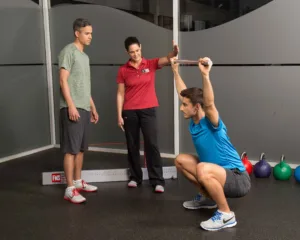
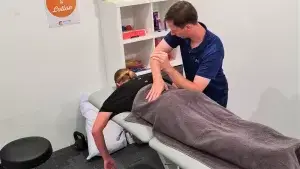
The process is straightforward and non-invasive. Your physiotherapist or osteopath will guide you through a series of simple movements—a deep squat, a lunge, a push-up, a single-leg stance, rotational movements. They’ll observe how smoothly you move, where you lose control, where you compensate, and identify asymmetries.
This assessment typically takes 20-30 minutes and requires no special equipment. The beauty of movement screening is its simplicity—these are movements your body performs daily. By observing how you execute them in a controlled environment, your clinician gains valuable insight into your injury risk.
The information gathered then becomes your personalised injury prevention plan. Rather than following generic exercises, you get specific interventions targeting your movement dysfunctions. This targeted approach is far more effective than general prehab routines because it addresses your actual vulnerabilities rather than everyone’s hypothetical ones.
What This Means For You
If you’re planning to increase your activity level—whether that’s training for a half-marathon, joining a new sport, or returning to exercise after time off—movement screening is worth your time and investment:
- It’s preventative. Addressing movement problems now prevents injuries that could sideline you for months, keeping you doing what you love.
- It saves money. Prevention is cheaper than rehabilitation. One injury avoided pays for multiple screening assessments.
- It’s evidence-based. This isn’t guesswork; recent research proves movement screening predicts injury risk accurately.
- It’s personalised. You get a plan tailored to your specific deficits, not generic advice from an app or internet article.
- It improves performance. Better movement patterns mean better efficiency, power, and control in your sport or activity—you’ll perform better and feel stronger.
The Bottom Line
Movement screening represents a paradigm shift in how both physiotherapy and osteopathy approach health—from reactive treatment of injuries to proactive prevention. Recent 2025 research validates what practitioners have long understood: how you move predicts whether you’ll get injured, and fixing movement patterns before injury happens is one of the smartest investments you can make in your long-term health and athletic longevity.
Whether you’re an ambitious athlete, a weekend warrior, or someone starting something new, a movement screening assessment can identify your specific vulnerabilities and set you on a path to injury-free activity.
Book Your Movement Screening Today
Don’t wait for an injury to force you to get assessed. Our osteopathy team can identify your movement patterns and design a personalised prevention plan to keep you doing what you love, injury-free. Contact us today to schedule your movement screening assessment and take the first step toward staying healthy and active.
We’re happy to answer any questions you might have, please email us if you need any advice! info@chadstoneregionosteo.com.au